OMNIA OMNIA.11 Audio Fm Telos Digital Processor
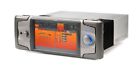
( Brand: Omnia ), ( Part Type: Processor )
Review OMNIA Audio Fm Telos Digital Processor
The Omnia Audio FM Telos Digital Omnia.11 Processor is a state-of-the-art audio processing solution designed for radio broadcasters seeking superior audio quality and flexibility. This digital audio processor offers a comprehensive suite of tools to enhance your on-air sound, ensuring a professional and engaging listening experience for your audience.
The Omnia.11 is equipped with Omnia's renowned DSP algorithms, delivering exceptional audio processing capabilities. These include noise reduction, EQ, and limiter functions, all optimized for FM broadcasting. The processor also features Omnia's patented PURE-iQ technology, which ensures low distortion and wide-bandwidth audio, resulting in a clear and crisp sound.
One of the standout features of the Omnia.11 is its advanced multiband compressor, which allows for precise control over dynamic range. This feature enables broadcasters to maintain consistent levels while preserving the natural dynamics of the audio, resulting in a more natural and engaging listening experience.
The processor also includes a built-in loudness controller, ensuring compliance with the CALM Act and other loudness regulations. This feature ensures that your audio levels are consistent across all platforms, providing a more enjoyable listening experience for your audience.
The Omnia.11 is packed with connectivity options, including analog and AES digital inputs and outputs, as well as an Ethernet port for remote control and monitoring. The processor can also be integrated with Telos Alliance's Axia Livewire AoIP network for seamless integration with other broadcast equipment.
The Omnia.11 is housed in a robust, rack-mountable chassis, ensuring reliable operation in even the most demanding broadcast environments. The processor's user interface is intuitive and easy to use, with a large, high-resolution touchscreen display and clearly labeled controls.
In conclusion, the Omnia Audio FM Telos Digital Omnia.11 Processor is a powerful and versatile audio processing solution for radio broadcasters. Its advanced features, robust design, and ease of use make it a top choice for broadcasters seeking to deliver exceptional audio quality to their listeners.
Pros of Buying Omnia.11 Processor by Omnia Audio FM Telos:1. Advanced Audio Processing: The Omnia.11 processor offers advanced audio processing capabilities, ensuring high-quality sound output.
2. Customizable Presets: It allows users to create and save custom presets, which can be easily recalled for consistent audio performance.
3. Automatic Leveling: The processor includes an automatic leveling feature that helps maintain consistent audio levels, reducing the need for manual adjustments.
4. VoiceTrack Technology: The Omnia.11 processor comes with VoiceTrack technology, which helps smooth out sudden volume changes in speech and music.
5. Easy to Use: The device is easy to install and operate, making it suitable for both professionals and beginners.
Cons of Buying Omnia.11 Processor by Omnia Audio FM Telos:1. High Price: The Omnia.11 processor is relatively expensive compared to other audio processors in the market.
2. Limited Connectivity Options: The device may not have as many connectivity options as some other audio processors, which could limit its compatibility with certain equipment.
3. Requires Technical Knowledge: While the device is easy to use, it may require some technical knowledge to fully utilize its advanced features.
Conclusion:The Omnia.11 processor by Omnia Audio FM Telos is an excellent choice for those who value high-quality audio and require advanced audio processing capabilities. Its customizable presets, automatic leveling, and VoiceTrack technology make it a great tool for radio stations and audio production studios. However, its high price and limited connectivity options may be a drawback for some users. If you have the budget and technical knowledge, the Omnia.11 processor is a worthwhile investment for improving audio quality. If cost is a significant concern, consider looking at other options in the market that offer similar features at a lower price point.
Details:
The firmware in Omnia. An easy example of this would be music with deep defined bass and a solo guitar or vocal. 5khz figure 8, clipper induced mid 100hz 15khz notice as the upper frequency is increased there is significant difference spectra that falls between the two fundamentals.
Thunderous bottom end, sparkling highs, and crisp, clear voice reproduction. However, to date, all of our testing has been done without any composite clipping.
Being loud is not the problem. This is what happens when the control signal operates in an overly aggressive manner the sonic quality becomes fuzzy, dull, and lifeless. Multiple ways to adjust the system to achieve the exact sound you re looking for. Features chameleon processing technology a major part of this technology, the new density detector, enables Omnia.
Was this the common issue of too much bass forcing the rest of the spectrum into the limiter this is known as bass induced inter mod. By example, this is easily heard in the song because of you by Kelly Carlson. Clipper systems, distortion cancelling, and multiple bands.
A clipper, in reality, is a zero attack zero release time limiter operating with a ratio of infinity to one. Change is good from the very beginning, the developers of the Omnia. Omnia engineering has developed the new ultra loomed distortion controlled clipper system specifically to reduce mid in this critical stage of the processing.
5 diagonal screen, provides ease of use and enhanced metering and diagnostics. New ultra loomed distortion controlled clipper system audio processing for conventional broadcast fm and am has, in some applications, reached extreme levels. This breakthrough method literally analyzes the audio content in both the amplitude and frequency domain, then adapts the timing networks on the fly to transparently control the signal, without the control being heard.
Figures illustrate examples of this. Through critical listening, extensive research, and evaluation of processing methods, it has been determined the single most annoying quotient is due to inter modulation distortion mid induced by aggressive functions within the processing system. This was noticeable on all the processors used for evaluation. The density detector keeps Omnia.
Whereas suppressing harmonic distortion can easily be predicted and controlled through a static filtering system. Liveware, AWS EU digital and analog I o is standard. Not suitable for the needs of competitive audio. An entire dissertation could be done on the bass enhancement management system alone.
Some audio processors employ bass processing techniques to reduce and in some cases remove this annoyance. Headphone soft patch points are available for listening through the processing chain. For the first time, listeners will hear the programming, not the processor.
Various methods are available today capable of creating loud competitive signals, but at the expense of perceptible quality. One of the most crucial, aggressively used algorithms in the fm processor is the pre emphasized final limiter clipper. This is known as clipper induced mid.
See for yourself running the same mid tests, as mentioned earlier, now offer the following results. The proof is in the audio performance with critical content. 11 method, Kelly segment does not possess any of the bacon frying sizzle annoyance as heard prior with all other clipping systems. 5 khz and 10 khz, depending on location.
With the new Omnia. This indicated that the problem is harmonic, related to the clipping process. This was a high rotation song on Che contemporary hit radio formatted radio stations.
The tests were run over the range of5 khz up through 15 khz, while 100 Hz was used as a constant low frequency source. The attack release functions adjust themselves based upon content density. Inter modulation, due to added presence and high frequency spectra, has overtaken the problem that once was dominated by harmonic distortion.
5khz figure 13, clipper induced mid 100hz 15khz it is easy to see. So, team Omnia started with a fresh canvas. The result is revealed in added detail, clarity, and quality, yet maintaining the desired competitive loudness level. Witness what happens if some mid tests were run on present clipping systems.
That where the method eventually fails. 11 operating on target, at all times. Pilot protection is on the order of magnitude close to 90 db, which is considerably more protection than necessary for even the best fm receiver.
Fm stereo band width is 15 khz, and am is between 4. The challenging problems stated here are not based upon clipping functions of singular frequencies. Figure 4, clipper induced mid 100hz 5khz figure 5, clipper induced mid 100hz figure 3, Kelly Carlson segment notice in figure 3, a segment taken from the Kelly Carlson track, the dominance of signal centered at 500 Hz, and the range between 10 khz 15 khz. It does not matter if the content source contains deep rich bass or not the audio signal is subjectively cleaner for the same level of loudness.
The classic Omnia dynamically flat time aligned crossover system has been further refined to produce smooth, rich, and full tonality. So, in the end, with Oman. The results are dynamics algorithms that were once only a dream of the processing enthusiast.
As the Kelly Carlson example clearly illustrates, harmonic distortion is not the concern as it once was. Music synthesizers use various inter modulating functions to create desired sounds. The AFC and limiter sections cannot be fooled into false gain control due to spectral density or lack thereof from the crossover network.
The AFC system cannot be fooled due to heavy density, or by older source material which contains high peak to average levels. Through this action, the level is dynamically adjusted.
Adding more bands or steeper filters does not improve or fix the problem. Finales cooling design built into a rugged 4 Ru chassis. Bass management the bass enhancement algorithm is a key feature of the Omnia we refer to this as dynamic inter modulation distortion. All of them employ static filtering to mask distortion components.
11, that initial tests have revealed that many early adopters were genuinely startled by the lack of a traditional processor sound when the unit was first deployed. Compare figures to those of figures of both the old and new methods. 11 were determined to create a processor which would stand head and shoulders above the legendary Omnia 06. When processed aggressively, especially for fm stereo, the resulting audio appears synthetic in tonality and quality.
An explanation of the new ultra loomed clipper system follows shortly. Suppressing mid is significantly more difficult, as the constantly different frequency components are a non stop moving target. Bass sounds tight and defined, but depending upon the processor spectral limiting system, it can also sound distorted. It is clipper induced mid.
Up until now, it has been an accepted notion that clipper induced mid was a by product of deep bass and enhanced mid range presence treble content. As such, clipping harmonics are limited via non overshooting filtering methods in order to properly maintain operating legal band width . Special attention was paid to the behavior of live voice quality.
This example is just one of many which illustrate the challenges in current processing technique. Suffice it to say, the prior statement along with technology enables a clipping system in Omnia.
Multi band clipper filtering is done in parallel architecture and each singular band clipper is not able to understand what the others are doing. Modern clipping methods, with distortion management, reduce clipping side effects over a preset range and only up to a specified level.
Since this problem exhibits itself with full range linear recordings, data reduced content mp3 audio files is even more distorted. When clipping is active, the guitar or vocal will warble at the rate of the bass frequency due to the action of the bass signal pushing the guitar vocal signal in and out of the clipper. Something else, apparently.
This is an example of inter modulation, as the audio is modulated by the control function. On account of this, mid components are amplified in level and spectra. Two audio frequencies are mixed together, then passed through the system under test and the output is observed on a scope and spectrum analyzer.
All of these fail with aggressive processing. In this instance, the clipping systems all employed the required 15 khz low pass filtering and zero overshoot control mechanisms found in broadcast processors. In depth ultra loomed clipper system explained audio processing for conventional broadcast fm and am has reached extreme levels. 5khz figure 11, clipper induced mid 100hz 10khz figure 12, clipper induced mid 100hz MP spectral low pass filter to protect RDS and SAC signals if composite clipping is employed.
Under the microscope performing an mid test on a clipping system is quite easy. Effortlessly loud. Achieving great sounding bass requires the most effort, partly due to the fact that the bass spectrum has the most number of harmonics, and all of these must be kept properly accounted for in the time domain. At first, it would seem so, but the test segments did not have any bass content, and the frying was still present.
For the exact same amount of clipping employed, mid range, presence, and treble mid is gone. An installation wizard will guide anyone through a simple step by step setup to on air operation. They vary in range from broadband to 5/6 band, or more. Figure 9, clipper induced mid 100hz 5khz figure 10, clipper induced mid 100hz laptops to iPad's will have access.
11, everything you hear is true. Basically, some form of masking method is used to hide the most annoying clipping side effects from the ear. Since the aforementioned bacon frying annoyance was affected by the action of the clipping function, a probe into that algorithm was in order. While open for subjective discussion, the end result is still the same absolute peak control is performed and a minimal level of harmonic distortion is acceptable within a specified operating range.
When studying the example of the Kelly Carlson track, it became evident the problem was related to clipper induced mid, except the example does not possess any bass spectrum of any significance. Everything from the firmware platform, the GUI, to every algorithm was re thought, and in most cases completely re engineered or re designed. Even the location where the function is inserted matters, as well as how it maintains its frequency range along with the rest of the system.
Sometimes this is done for specific effect. As a matter of subjective observance, all audio auditioned through this new method sounds cleaner for the same given level of loudness.
Therefore, the resulting filtered harmonics of each band interact in unpredictable ways some of which exaggerate mid. Diversity delay. Of interest is that each of these use a static method to mask harmonic distortion when clipping is active.
A high frequency component was mixed in at the same level and 75pre emphasis was applied. Most final limiting clipping systems in modern audio processors employ some form of proprietary means to control perceived distortion.
Figures are the results of the tests. As stated, all present day clipping systems employ methods to control distortion. Reducing the final limiting, or clipping, helped ease the pain.
Listening to current music, with aggressive processing, produces a distinct annoyance the appearance of a sizzling or frying sound to mid range, presence, and treble spectra. This is extremely severe at 10 khz, 12 khz, and 15 khz. Proof of this is demonstrated with an evaluation of present day distortion canceling systems. Since most of those require aggressive processing, this test case replicates the real world.
The broadband method suppresses harmonics and some mid at specific frequencies. The opening of the selection is a piano solo, and the vocalist begins to hum along with the piano, a few seconds later. Significant reduction of clipping removed the annoyance, but the loss of loudness was on the order of 6 db or more.
Multi band clipping does not take into consideration any interactivity of outlaying spectra. Present day audio processors, set up aggressively, cause the humming in the vocal to sound as if bacon is being fried.
Ultra multi band limiter system traditional limiting technology has often resulted in various forms of audio corruption. The methods for these vary. Recordings which are so heavily processed, that they sound as if they re on the air, before being on the air.
Figure 1, 1khz square wave figure 2, 1khz square wave spectra note broadcast audio processors band limit frequency spectra within a specified range, for their respective transmission paths. If you recall the music example, this is very close to the spectral illustration in the Kelly Carlson track. The algorithms are pushed to the limits, and beyond.
With the above example in mind, let consider what happens within a clipper, when multiple audio signals are present and clipping is applied. The multi band methods are designed to insert gentle low pass filters after multi band clippers in each audio band. Various methods are available today capable of creating loud competitive signals, but at the expense of perceptible quality. Sum and difference frequencies are created along with another component known as inter modulation, or mid for short.
5khz figure 6, clipper induced mid 100hz 10khz figure 7, clipper induced mid 100hz Ag's, compressors, and limiters analyze music in real time and adjust internal parameters for optimum performance across a broad range of material. When multiple frequencies are present and clipping is active, the lower fundamental frequency will push the higher fundamental frequency into, and out of, the clipper at the rate of the lower frequency. The resultant contains the level adjusted audio along with harmonics from the controlling signal that were inter modulated into the final product.
Low end is now broadcast with recording studio like punch and impact, with no traditional side effects whatsoever. 11 adapts itself, based upon the answers, to craft a preset which delivers the desired end result quickly for an effortless out of the box experience. Using a sine wave for an example, if the upper and lower peaks of the waveform are chopped off clipped, harmonics are born out of the clippings and show up within the spectrum space as harmonic multiples of the original frequency.
Was it in the original source, and the processor was magnifying it via multi band dynamics control careful evaluation of the source audio revealed the answer to be no. This works over a narrow range, but falls apart with aggressive levels of clipping. Simply stated, this is where one signal will ride alongside, on top of, or modulate another. 11 takes advantage of software capabilities never before possible.
The low level distortion and artifacts, long accepted as part of the fundamentals of processing, are now almost completely gone and certainly not perceptible to the ear. The result is unlike any existing product of its kind to date exclusive bass management method is a mixture of innovation, as well as a rearrangement of the system topology. Using the answers to a series of simple questions, Omnia. So dramatic is the advancement of Omnia.
11 to properly handle hyper compressed content. All AFC and limiting algorithms employ an auto acceleration deceleration mechanism, which tunes out perceptible inter modulation distortion. In addition a front panel touch screen GUI, on anew loomed technology coupled with smart gain reduction algorithms, now have limiters which sound amazingly transparent. The level controlling signal and audio is routed to a multiplier function, and the audio is multiplied by the controlling signal.
Ita combination of breaking down the audio spectrum by octaves and interaction with the Gibbs phenomenon.
part #: omnia.11 price
- $12299.00
Offer:
- # bids: 0
- quantity: 3
- # Sold: 0
- best offer: true
- Started: January 27, 2015, 9:37 am
Ratings:
- super quickly 01-26-15
- Great Seller thanks, fast shipping 01-25-15
- Great Seller thanks, fast shipping 01-24-15
- great item, fast shipping, perfect transaction 01-24-15
Seller:
- zipcode: 92110
- city: San Diego, California
Payments:
- PayPal
Returns:
- policy: no returns
Shipping:
- handling: days
- type: Flat
- cost: $278.0
General:
- in stock: Yes
- Musical Instruments & Gear > Pro Audio Equipment > Signal Processors/Rack Effects
- condition: New
Omnia OMNIA.11 Is Similar To:
- 2001-00220 Omnia Telos One Fm (25.3% similar) 02 Thad 20 Hz khz band width , 75S reemphasized, referenced to 100 modulation. Program material with a nominal average level VI reading of 4DBU will typically produce peak readings on the input meter in range 12 DBMS to -6DBFS. The analog left right outputs and AWS EU digital can be configured for ...(January 25th, 2018)
- 4503-1000 Telos Omnia Fm Hot Digital Broadcast Radio Audio Processor (47.5% similar) Used but in good working order. Analog I oars composite out two 19KHZ Itasca in expansion cards included sold as is contact me with questions...(May 7th, 2018)
- 5212003699975 Telos Omnia 6 Exi Hd Fm Digital Audio Processor Ex-demo (45.4% similar) This is an ex demo telos system, cutting edge Omnia 6 exit fm HD. The unit is in perfect working and cosmetic condition. This is the exit version with the very latest hardware and firmware...(September 17th, 2016)
- 6exi Omnia Telos Hd Fm Digital Audio Broadcast Processor Orban Optimod (46.7% similar) The fm section receives distortion-controlled final limiting with pre-emphasis, and an upper-frequency response of 15 khz. OMNIA-6EXI has a unique parallel processing structure that routes audio from the mixer section to output stages for conventional fm and dab. The dab section has a multi-band ...(February 13th, 2019)
- Omnia-3 Omnia A Telos Company (35.4% similar) Buy here and save. A wide range of factory presets specially tuned to take advantage the powerful processing capabilities found in OMNIA-3 processors. Impressive features aside, its the final product your signature sound that matters. This unit may also be used for processing in an audio production ...(December 21st, 2017)
- Omnia-3fmt Omnia A Telos Company (36.6% similar) With this new version of the existing OMNIA-3 processing platform, you'll experience even more clarity and punch that Omnia users have come to rely on. Built in the USA by frank Otis crew at telos-Omnia Cleveland, oh. Info from telos-Omnia press release: OMNIA-3FMT: turbo-charging for more ...(November 9th, 2017)
- Omnia.fm.hot.sefx Telos Omnia Fm Hot (48.8% similar) Accepting best offers. Telos Omnia fm hot sex broadcast processor. Fully tested and working with both AWS analog inputs. The front panel is in cosmetically rough shape, with multiple scratches and gouges, however, display clear has no dead pixels lines. Modulation meter not included, for ...(June 17th, 2017)
- Te-2698 Omnia Toolvox True Verb Waves Digital Mic Pre Amp Voice (38.9% similar) Tear this listing is for a Omnia toolbox AWS digital mic pre-amp production voice processor. This unit powers on and came from a working environment. Cosmetically it looks to be in nice shape...(March 14th, 2018)
- Telos100 Telos Omnia 100 Delta (37.5% similar) Removed from a working environment...(May 13th, 2017)
- Two Telos Omnia 2 Isdn (41.7% similar) I don't have a Brie isn line on hand to test but no reason believe that there is any problem with the interface card. Telos 'two' isn Brie line codex hybrid interface used, very good condition AWS EU input output photos show the actual item for sale a lightly-used with digital I o as well usual ...(July 15th, 2017)
- Two Telos Omnia Isdn Bri Line Broadcast Codec Phone Hybrid (37% similar) I don't have a Brie isn line on hand to test but no reason believe that there is any problem with the interface card. Telos 'two' isn Brie line codex hybrid interface used, very good condition AWS EU input output photos show the actual item for sale a lightly-used with digital I o as well usual ...(April 5th, 2018)