YAMAHA R-100 Rack Reverb Effects Delay Digital Echo Half Processor
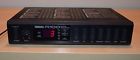
( Brand: Yamaha ), ( Type: Multi-effects Processor ), ( Effect/enhancement: Delay ), ( Form Factor: Tabletop ), ( Country/region Of Manufacture: Japan )
Review YAMAHA Rare Vintage Rack 100 Reverb Effects Delay Digital Echo Processor
The R-100 Yamaha Rack Reverb Effects Delay Digital Echo Processor is a versatile and powerful audio processor that is designed to enhance the sound quality of your music or audio recordings. This half-rack unit is equipped with a variety of advanced digital reverb and delay effects that can add depth, width, and character to your sound.
The R-100 features 16 different reverb types, including room, hall, plate, and chamber, as well as a variety of delay effects such as echo, slapback, and ping-pong. Each effect can be customized to suit your specific needs with adjustable parameters such as decay time, feedback, and pre-delay. The unit also includes a built-in equalizer to help you shape the tone of your sound.
One of the standout features of the R-100 is its high-quality digital signal processing (DSP) engine, which allows for precise and accurate processing of audio signals. This ensures that the effects sound natural and realistic, rather than artificial or processed. The unit also has a high-resolution display that makes it easy to see and adjust the settings, and it has MIDI connectivity for easy integration into your existing setup.
The R-100 is also very easy to use, with a simple and intuitive interface that allows you to quickly and easily select and adjust the effects. The unit has a rugged and durable construction, with a metal chassis and high-quality components, making it suitable for use in a variety of settings, from live performances to studio recordings.
Overall, the R-100 Yamaha Rack Reverb Effects Delay Digital Echo Processor is a powerful and versatile audio processor that is ideal for anyone looking to add depth, width, and character to their sound. With its advanced digital reverb and delay effects, high-quality DSP engine, and easy-to-use interface, it is a great choice for musicians, audio engineers, and anyone else looking to improve their sound.
Pros of buying a R-100 Yamaha Rack Reverb Effects Delay Digital Echo Processor:1. High-quality sound: The R-100 is known for its superior sound quality, with multiple reverb, delay, and echo effects that can enhance the overall sound of your music.
2. Versatility: The R-100 has a wide range of effects that can be used in various genres of music, from rock and pop to jazz and electronic music.
3. Durability: The R-100 is built to last, with a sturdy metal chassis and reliable components that can withstand regular use in a live or studio setting.
4. Programmability: The R-100 has a user-friendly interface that allows you to easily program and save your favorite effects settings, making it easy to switch between different sounds during a performance.
Cons of buying a R-100 Yamaha Rack Reverb Effects Delay Digital Echo Processor:1. Price: The R-100 is a high-end effects processor, and its price may be prohibitive for some musicians or bands on a tight budget.
2. Size and weight: The R-100 is a rack-mountable unit, which means it requires its own dedicated rack space and can be heavy to transport.
3. Complexity: While the R-100 has a user-friendly interface, it can still be intimidating for beginners who are not familiar with effects processors.
Conclusion:The R-100 Yamaha Rack Reverb Effects Delay Digital Echo Processor is a high-quality, versatile, and durable effects processor that can greatly enhance the sound of your music. However, its high price and size/weight may be prohibitive for some musicians or bands. If you have the budget and the space, and you are looking for a top-of-the-line effects processor, the R-100 is definitely worth considering.
Recommendation:If the R-100 is beyond your budget or if you are looking for a more compact and affordable option, there are other high-quality digital effects processors available on the market, such as the Boss GT-100 or the Line 6 Helix LT. These units offer a wide range of effects and are more affordable than the R-100, but they may not have the same level of sound quality or versatility. Ultimately, the best choice for you depends on your budget, your needs, and your preferences.
Details:
Once set, the channel allocation is remembered when the unit is switched off. The one caveat is that there's sometimes some audible glitching as the parameters are changed, especially if they relate to delay time or reverb decay time so this method of access is more useful for in depth patch editing than for smooth real time control. The first 40 patches are all variations on different types of reverb, from plates and room ambience up to large halls, chambers, churches and even a bathroom. The input level is set by the control of the same name, and two peak leds are fitted, one monitoring the left channel and the other the right.
Patches 61 to 70 are delay reverb combinations, and the remaining 30 are reverb modulation combinations, embracing flanking, symphonic chorus, Leslie emulation, tremolo and panning. However, edited patches can be reset back to the factory settings, either individually or globally. Here is a really cool vintage Yamaha r100 half rack reverb effects processor, unit is used but still works good.
Overview the rev100 provides six basic effect types, and the role of the three continuous control knobs depends on what type of effect is selected. The front panel is very simple, with only five knobs, four buttons, and a two digit led display. Technically then, the reverb is hardly state of the art, but artistically, if you already have a natural sounding reverb, it's a very useful addition to the armoury.
The gated reverb are fine after all, they're supposed to be brash but there seemed to be no reverse simulations, which is a pity. As a main reverb, however, i'd be reluctant to recommend the rev1 even bearing in mind its low cost. Patches may be called up via midi, and a program table system allows the patches to be assigned to different midi program numbers if you happen to want them in a different order. Externally speakings 1u rack units go, the rev100 is visually fairly unremarkable, but it is solidly built, nicely styled, and the controls have a smooth, positive feel to them.
The effects as supplied, all 100 of the rev100's memories are occupied by factory patches, and if you do decide to edit a patch, it has to be saved in the same location. The wet dry balance is set manually, courtesy of the next knob along, though this parameter isn't stored as part of a program. As is becoming increasingly commonplace, the mains power comes from an external adaptor. Buyer pays a flat rate of 10.
Midi is catered for only via a midi in socket, so you can't dump your patches to midi, but given that you can only edit the patches superficially, this isn't much of a limitation. Perhaps the best part of this machine is the modulation section. Simple up down arrow buttons are used to navigate through the 100 patches as supplied, the midi mode is set to Omani, but by switching on the unit while holding down the midi button, the rev100 can be set to operate on any one of the 16 available midi channels.
Many modern sequencers will allow you to construct a virtual fade page, with each fade sending the requisite controller data, thus providing a useful way to edit and save settings.
Like others, the rev100 offers a choice of presets which can be modified by using knobs to adjust the two most important parameters, plus the effect level. Even so, you can make some real time adjustments smoothly enough to use in a mix.
Similarly, some of the reverb are a little coarse, but this really flatters things like synth pad sounds, strings and even vocals. Similarly, you can use a mono output by just plugging into the left hand output jack. If you don't have a suitable sequencer, pretty much any keyboard with an assignable mod wheel or fade will give you midi control. However, the hidden power of the rev100 should not be underestimated quite apart from the fact that the reverb is a powerful engine capable of delivering 20hz to 20khz effects, with a creditable 80db signal to noise ratio, you can also access up to eight parameters per effect using midi controller information.
All these last combinations include a preset reverb effect that can be varied in level, though if you're using midi controllers, you can change the reverb parameters as well as having more control over the modulation parameters. The biggest change comes about in the reverb modulation mode, where you can set the modulation depth and rate plus the reverb level, but not the resonance amount of, say, a flange patch without using midi controllers. I also liked the chorus effects, Yamaha's classic symphonic setting, and the neat panning effects.
For shipping in the us. As a result, you can't, for example, decide you don't like some of the gated presets and replace them with your favourite reverb the reverb have to stay where they are. Here, there are some really dramatic flanking and phasing sounds, which I particularly liked you can lay the flanking on really thickly, and get a very strong, almost analogue sweep sound.
This tonality is reminiscent of early Yamaha reverb units, but ironically, it has become popular in contemporary dance music production, because of its brash, aggressive character. After hastily constructing a few midi fades on my sequencer's environment page, I tried using controller information to access the various parameters described in the manual see the 'controller parameters' box for details, and found that everything worked as documented. A red led adjacent to each knob flashes when you pass through the position corresponding to the stored data, so you can always see whether you are increasing or decreasing the original parameter value. Offer is for the unit and the wall wart power supply on the face of it, Yamaha's new rev100 appears to be another simple to use 'reverb plus chorus delay' box.
The two remaining buttons, midi and store, provide access to the midi program change table and allow edited programs to be stored respectively. If you're working on a mono or stereo reverb, the controls set the pre delay, reverb decay time and effect level, but in gate reverb mode, the decay control sets the gate level. There are two audio ins and outs on unbalanced jacks, and if you don't want to use a stereo input, plugging into the left input only will do the trick.
part #: r-100 prices
- $72.50-$99.96
specifications signalprocessorgo:
- brand: Yamaha
- type: Multi-effects Processor
- effect/enhancement: Delay
- form factor: Tabletop
- country/region of manufacture: Japan
Payments signalprocessorgo:
- PayPal
Ratings:
- good seller 10-08-15
- AAAA++++ Great Seller 10-04-15
- Awesome ! Prompt payment!!! 10-01-15
- great product quick shipment easy transaction GO DUCKS 09-30-15
- : * *: .10.: * *: .Stars.: * *: .Excellent: * *: .ESELLER.: * *: .Thank U 10-01-15
Shipping signalprocessorgo:
- handling: 3 days
- cost: $10.0
- type: Flat
Returns signalprocessorgo:
- policy: no returns
Offer signalprocessorgo:
- # Sold: 0
- quantity: 1
- Started: October 8, 2015, 5:58 am
- best offer: false
- # bids: 0
General signalprocessorgo:
- condition: Used
- Musical Instruments & Gear > Pro Audio Equipment > Signal Processors/Rack Effects
- in stock: Yes
Seller signalprocessorgo:
- city: Eugene, Oregon
- zipcode: 97402
Yamaha R-100 Is Similar To:
- 01v96-vcm Yamaha Professional Digital Mixer Great Condition (39.1% similar) This unit is in overall great condition and it has been factory reset fully tested. This unit was used in a studio environment and overall shows very little to no wear...(February 26th, 2018)
- 1000multi Processor Effect Yamaha Spx (27.6% similar) Yamaha spx 1000MULTI effect processor...(January 3rd, 2015)
- 17273 Yamaha Reverb Parts Digital Rev-7 Unit Japan Restore Work (42.3% similar) I fired it up and thought, cool, it's lighting up maybe i'll hook up some sound to it. But then it started fluttering and then changes I was able to do with buttons stopped, and then I saw smoke, and then I unplugged it, and now here it is for your consideration. Save some shipping moneys if you are...(August 1st, 2015)
- Yamaha 19112 Reverb Digital Unit Repair Reverberator 5 Effect Rev (47.2% similar) Our credit card processing is 100 secure and your privacy is very much respected and kept discreet. Although tempting, put down the extra sauce and cheese deep dish pizza that is dripping all over your leather vest and beard and be sure your hands are clean and dry before trying out your awesome new...(June 5th, 2015)
- Unit Multi Effects 2-used Yamaha Spx990 (25.4% similar) In perfect working order. Being sold as is so ask all questions before buying. Scratches on top and bottom from being taken in and out of the rack. A up for offer is 2 Yamaha SPX990 multi effects unit. Front of unit is in great shape...(November 5th, 2014)
- Digital Processor 20011 Multi-effect Ii Yamaha Spx90 (26% similar) Please inquire before purchasing. Software, computer hardware, computer drives and other digital or media tape. Although tempting, put down the extra sauce and cheese deep dish pizza that is dripping all over your leather vest and beard and be sure your hands are clean and dry before trying out your...(December 14th, 2014)
- 2020bii Compressor Gc Vintage Expander Limiter Rack Xlr Yamaha Gate (34.2% similar) ...(December 22nd, 2014)
- Reverb Rev Yamaha Digital 21510 Reverberator 7 Unit Echo (41.5% similar) Our credit card processing is 100 secure and your privacy is very much respected and kept discreet. Please inquire for a special quote. It does not cover such things as normal wear and tear. Acts of god, the old gods and the new gods, forces of nature, product defects recall type manufacturer issues...(April 2nd, 2015)
- Analog Effects Yamaha E1010 21555 Rack Processor Delay (33.1% similar) And all original manufacturer packaging in new condition. The unit shows signs of use various exterior blemishes, some paint specks on the front panel, some light dings and scuffs, though nothing major. It does not cover such things as normal wear and tear. Loss from theft or loss from loss you like...(April 12th, 2015)
- Ad824 Yamaha Precision Ad Converter Rack Mount Free Shipping (31.7% similar) ...(November 30th, 2018)
- Ad8hr Yamaha Analog To Digital Converter Fully Tested (37.9% similar) These units have been fully tested and they work great, the only issue is missing LCD cover does not affect operation...(November 7th, 2018)